Some physicians still say that kyphoplasty does not work. That belief traces back to two vertebroplasty trials published in 2009, and it has outlived the evidence. It ignores what those trials actually tested, the randomized trials of kyphoplasty itself, and what happens to people who are left to wait out a painful fracture. The cost falls on patients, and some of them are never told the procedure exists.
Having done many of these procedures, I can say there is no question that it helps people significantly. Experienced operators who have studied it closely hold the same view, among them Douglas Beall, whose studies, review and care pathway are cited below. It is a view worth debating, and this is the case for it.
Two men who were never offered it
A man was hospitalized with a compression fracture of L3. From the hospital he went to a transitional care facility, with no hope of recovery. No one offered him kyphoplasty. His daughter found the procedure by searching online and sent him for an evaluation. Two days after kyphoplasty he was home. He lived there for the rest of his life, about a year.
A second man, in his 90s, lived independently until he fell from the third rung of a ladder. He had severe mid-back pain. The initial CT of his head and spine was read as showing degenerative changes and no acute injury. Looking back at the spine images, there was a small gas bubble, swelling around the vertebral body, and a faint fracture line.
He was given opioids. Six weeks later the pain was worse. An MRI showed that T12 had lost substantial height, with marked bone marrow swelling on a fluid-sensitive sequence called STIR. The MRI also showed arthritis and nerve impingement. He was told that surgery was not recommended at his age and that the arthritis and nerve impingement were thought to explain his pain. He was advised to wear a brace and try physical therapy. As he lost the ability to manage daily tasks, his family began to consider assisted living. Instead, they looked into other options and brought him for an evaluation.
On a later CT, labeled “10 weeks later” in the case record, T12 had collapsed, leaving a large cleft in the vertebral body. His Oswestry Disability Index, a 0 to 100 score, was 46. He underwent kyphoplasty through one pedicle. Two weeks later he said he felt “like a million bucks.” He was off opioids, could manage daily tasks again, and his Oswestry score was 20.
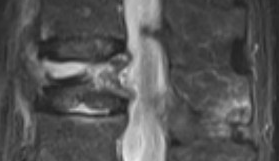
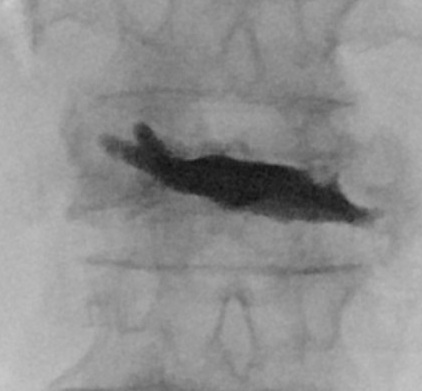
Neither man was offered kyphoplasty. Both reached it because their families went looking. The second had been told surgery was not recommended at his age, but kyphoplasty is a needle procedure done under sedation, not an open operation. Two cases do not show how often a patient will improve. They show what is lost when the question is never asked.
Where “it doesn’t work” came from
In 2009 the New England Journal of Medicine published two randomized trials of vertebroplasty against a sham procedure. Vertebroplasty is cement through a needle. There is no balloon. Kallmes and colleagues randomized 131 patients with one to three painful osteoporotic fractures. At one month, vertebroplasty and the sham procedure did not differ on disability or on pain.1 Buchbinder and colleagues enrolled 78 patients with one or two fractures that were less than a year old and still unhealed on MRI. Vertebroplasty had no advantage at one week, or at one, three, or six months.2
Those two trials are the foundation of the claim that the procedure does not work, and they carry far more weight than they can bear. Together they randomized 209 patients. They tested vertebroplasty, not kyphoplasty. Neither paper reported which vertebrae were treated, and only one reported the cement volume, an average of 2.8 mL. Boszczyk calculated that a typical vertebra at the junction of the thoracic and lumbar spine, the most commonly treated level, needs at least about 4 mL for a meaningful mechanical effect. He concluded that the published details could neither prove nor disprove that vertebroplasty works.3 The crossover in the Kallmes trial says something too: by three months, 51% of the sham group had crossed over to vertebroplasty, against 13% who crossed the other way.1
Since then, a sham trial has found a benefit for vertebroplasty in fractures less than six weeks old, and a sham trial has not.4,5 Both are vertebroplasty. Neither is balloon kyphoplasty.
Kyphoplasty against the care patients actually get
Balloon kyphoplasty inflates a balloon in the fractured vertebral body, then fills the cavity with cement. Its randomized trials compared it with nonsurgical care, which is what a patient who is not offered the procedure actually receives.
The FREE trial randomized 300 adults with one to three acute vertebral fractures, within three months of the onset of pain, to kyphoplasty or nonsurgical care. At one month, the SF-36 physical component score had risen by 7.2 points after kyphoplasty and by 2.0 points with nonsurgical care.6 Back pain was lower after kyphoplasty at every follow-up over two years. The physical score difference was no longer statistically clear at 12 and 24 months. New vertebral fractures were not more common after kyphoplasty.7
Reviews that pool the comparative studies point the same way. Across 27 prospective studies, pain fell 5.07 points on a 0 to 10 scale after kyphoplasty and 4.55 after vertebroplasty, against 2.17 with nonsurgical care. The authors noted that the studies varied widely.8 Beall and colleagues updated that analysis with 25 later Level I and II studies: pain fell 4.05 points after kyphoplasty, significantly more than the 2.66 with nonsurgical care.9 A 2025 review limited to randomized trials and prospective comparative studies with at least 100 patients found less pain after kyphoplasty than with conservative care at 1, 3, 6 and 12 months, most at one month (a difference of 2.3 points). Disability was better at 1 and 3 months but not later, and new fractures were not more common. The authors rated the evidence on pain as of moderate certainty.10
EVOLVE, reported by Beall and colleagues, prospectively followed 350 Medicare-eligible patients after balloon kyphoplasty at 24 US sites, with fractures from osteoporosis or cancer. At three months, average back pain fell from 8.7 to 2.7 out of 10 and the Oswestry score from 63.4 to 27.1.11 EVOLVE had no untreated comparison group.
Waiting is not harmless
The case for waiting assumes that most fractures settle on their own. Suzuki and colleagues followed 107 people over 40 who came to an emergency unit with an acute low-energy vertebral fracture. Pain averaged 70.9 out of 100 at three weeks and was still 60.5 at a year.12
A German study tested the usual advice to wait six weeks before offering a procedure. Older patients with painful osteoporotic fractures were all treated for six weeks with pain medicine, bracing and physical therapy, then offered the choice of continuing or crossing over to radiofrequency kyphoplasty, a variant that uses a very thick cement. Success meant pain at least 2 points lower on a 0 to 10 scale, pain no higher than 5, and no worse disability. After six weeks of conservative care, 1 of 65 patients met that definition. After twelve weeks, 5 of 38 did. Six weeks after kyphoplasty, 31 of 33 did. The patients chose their treatment; this was not a randomized trial.13
Bracing, the usual alternative, has limited evidence behind it. A brace may help pain for a few months.14,15 “Conservative care” is not a proven treatment that kyphoplasty has to beat; it is the less tested of the two.
Fewer procedures, more deaths?
Ong, Beall and colleagues examined the full US Medicare data set from 2005 to 2014. The share of patients with a vertebral compression fracture who were treated with augmentation rose from 20% in 2005 to 24% in 2007 and 2008, then fell to 14% by 2014. After adjustment, the risk of death for patients with these fractures was 4% higher in 2010 to 2014 than in 2005 to 2009. Over ten years, patients treated with kyphoplasty had a 19% lower adjusted risk of death than those managed without surgery.16 Other analyses point the same way. Hinde and colleagues pooled seven studies covering more than 2 million patients. Those treated with augmentation were 22% less likely to die (hazard ratio 0.78, 0.66 to 0.92).17
These are claims data. They can adjust for illness they can see in the record, but they cannot prove that cement prevented a death, because healthier patients may be the ones offered a procedure. McCullough and colleagues found evidence of exactly that in Medicare claims from 2002 to 2006. Before their procedure, the patients who went on to augmentation already had fewer medical complications than those who did not. After propensity matching, one-year mortality did not differ.18 A 2025 review of mortality also found no clear survival difference (hazard ratio 0.91, 0.73 to 1.15) and pointed out that patients counted in the procedure group first had to survive long enough to have the procedure.19
The mortality question is not settled. One Medicare study found higher mortality after augmentation once it had matched the groups closely (hazard ratio 1.81), although its first, simpler analysis had found the opposite. When that review pooled the three studies that took such extra steps against selection bias, the result leaned slightly toward conservative care but could easily have been chance (hazard ratio 1.19, 0.48 to 2.97).19 No pooled analysis has found higher mortality after augmentation, and most of the largest point the other way. Leaving an older person in pain, in bed, and on opioids is not a neutral choice.
Who should be offered it
In 2018 a panel of spine surgeons, interventional radiologists and pain specialists, Hirsch and Beall among them, rated 576 clinical scenarios using the RAND/UCLA Appropriateness Method. MRI was the preferred imaging test. Augmentation was rated appropriate when advanced imaging confirmed a fracture and symptoms had worsened, and in patients with two to four unfavorable conditions, such as progressive loss of height or a severe effect on daily functioning, depending on their relative weight. Time since the fracture mattered less.20
The man who fell from the ladder met those criteria several times over. MRI showed marrow swelling at T12, his pain got worse, T12 kept collapsing, and he was losing his independence.
Cement can leak out of the vertebral body. In FREE’s first year, the two serious events attributed to the procedure were a hematoma and a urinary tract infection.6
The vertebroplasty sham trials disagree with each other, and the survival figures are associations. Neither justifies telling an older person with a painful, worsening fracture that nothing can be done. The man with the L3 fracture went home because his daughter searched online. Patients should hear about kyphoplasty from their doctors.
References
- Kallmes DF, Comstock BA, Heagerty PJ, et al. A randomized trial of vertebroplasty for osteoporotic spinal fractures. N Engl J Med. 2009;361(6):569–579. https://doi.org/10.1056/NEJMoa0900563
- Buchbinder R, Osborne RH, Ebeling PR, et al. A randomized trial of vertebroplasty for painful osteoporotic vertebral fractures. N Engl J Med. 2009;361(6):557–568. https://doi.org/10.1056/NEJMoa0900429
- Boszczyk B. Volume matters: a review of procedural details of two randomised controlled vertebroplasty trials of 2009. Eur Spine J. 2010;19(11):1837–1840. https://doi.org/10.1007/s00586-010-1525-4
- Clark W, Bird P, Gonski P, et al. Safety and efficacy of vertebroplasty for acute painful osteoporotic fractures (VAPOUR): a multicentre, randomised, double-blind, placebo-controlled trial. Lancet. 2016;388(10052):1408–1416. https://doi.org/10.1016/S0140-6736(16)31341-1
- Firanescu CE, de Vries J, Lodder P, et al. Vertebroplasty versus sham procedure for painful acute osteoporotic vertebral compression fractures (VERTOS IV): randomised sham controlled clinical trial. BMJ. 2018;361:k1551. https://doi.org/10.1136/bmj.k1551
- Wardlaw D, Cummings SR, Van Meirhaeghe J, et al. Efficacy and safety of balloon kyphoplasty compared with non-surgical care for vertebral compression fracture (FREE): a randomised controlled trial. Lancet. 2009;373(9668):1016–1024. https://doi.org/10.1016/S0140-6736(09)60010-6
- Boonen S, Van Meirhaeghe J, Bastian L, et al. Balloon kyphoplasty for the treatment of acute vertebral compression fractures: 2-year results from a randomized trial. J Bone Miner Res. 2011;26(7):1627–1637. https://doi.org/10.1002/jbmr.364
- Papanastassiou ID, Phillips FM, Van Meirhaeghe J, et al. Comparing effects of kyphoplasty, vertebroplasty, and non-surgical management in a systematic review of randomized and non-randomized controlled studies. Eur Spine J. 2012;21(9):1826–1843. https://doi.org/10.1007/s00586-012-2314-z
- Beall D, Lorio MP, Yun BM, Runa MJ, Ong KL, Warner CB. Review of vertebral augmentation: an updated meta-analysis of the effectiveness. Int J Spine Surg. 2018;12(3):295–321. https://doi.org/10.14444/5036
- Encalada S, Hunt C, Duszynski B, et al. The effectiveness of balloon kyphoplasty compared to conservative treatment for osteoporotic vertebral compression fractures: a systematic review and meta-analysis. Interv Pain Med. 2025;4(1):100569. https://doi.org/10.1016/j.inpm.2025.100569
- Beall DP, Chambers MR, Thomas S, et al. Prospective and multicenter evaluation of outcomes for quality of life and activities of daily living for balloon kyphoplasty in the treatment of vertebral compression fractures: the EVOLVE trial. Neurosurgery. 2019;84(1):169–178. https://doi.org/10.1093/neuros/nyy017
- Suzuki N, Ogikubo O, Hansson T. The course of the acute vertebral body fragility fracture: its effect on pain, disability and quality of life during 12 months. Eur Spine J. 2008;17(10):1380–1390. https://doi.org/10.1007/s00586-008-0753-3
- Bornemann R, Hanna M, Kabir K, Goost H, Wirtz DC, Pflugmacher R. Continuing conservative care versus crossover to radiofrequency kyphoplasty: a comparative effectiveness study on the treatment of vertebral body fractures. Eur Spine J. 2012;21(5):930–936. https://doi.org/10.1007/s00586-012-2148-8
- Rzewuska M, Ferreira M, McLachlan AJ, Machado GC, Maher CG. The efficacy of conservative treatment of osteoporotic compression fractures on acute pain relief: a systematic review with meta-analysis. Eur Spine J. 2015;24(4):702–714. https://doi.org/10.1007/s00586-015-3821-5
- Squires M, Green JH, Patel R, Aleem I. Clinical outcomes after bracing for vertebral compression fractures: a systematic review and meta-analysis of randomized trials. J Spine Surg. 2023;9(2):139–148. https://doi.org/10.21037/jss-22-78
- Ong KL, Beall DP, Frohbergh M, Lau E, Hirsch JA. Were VCF patients at higher risk of mortality following the 2009 publication of the vertebroplasty “sham” trials? Osteoporos Int. 2018;29(2):375–383. https://doi.org/10.1007/s00198-017-4281-z
- Hinde K, Maingard J, Hirsch JA, Phan K, Asadi H, Chandra RV. Mortality outcomes of vertebral augmentation (vertebroplasty and/or balloon kyphoplasty) for osteoporotic vertebral compression fractures: a systematic review and meta-analysis. Radiology. 2020;295(1):96–103. https://doi.org/10.1148/radiol.2020191294
- McCullough BJ, Comstock BA, Deyo RA, Kreuter W, Jarvik JG. Major medical outcomes with spinal augmentation vs conservative therapy. JAMA Intern Med. 2013;173(16):1514–1521. https://doi.org/10.1001/jamainternmed.2013.8725
- Wiedl A, Geiger F, Eberl J, Wirries A, Hammad A. Mortality after osteoporotic vertebral body fractures: cement augmentation versus conservative treatment—a systematic review and meta-analysis. Dtsch Arztebl Int. 2025;122(22):604–610. https://doi.org/10.3238/arztebl.m2025.0134
- Hirsch JA, Beall DP, Chambers MR, et al. Management of vertebral fragility fractures: a clinical care pathway developed by a multispecialty panel using the RAND/UCLA Appropriateness Method. Spine J. 2018;18(11):2152–2161. https://doi.org/10.1016/j.spinee.2018.07.025