Chronic limb-threatening ischemia, or CLTI, is the most severe stage of peripheral arterial disease (PAD). Both the limb and the patient’s life are at risk if the right tests are not done and, when needed, blood flow is not restored by someone skilled in doing it. Evaluating and treating these patients has become a complex and highly specialized discipline, and it takes a committed, knowledgeable and structured approach to prevent amputations and improve outcomes.
The opportunity to preserve the limb
Almost half of all major leg amputations are the result of CLTI.1 Amputation rates among US Medicare patients fell by almost 40% between 1996 and 2011, a fall credited to better medicines, better wound care and a shift to endovascular treatment.2 Even so, they remain high, and they are higher in Black and Native American patients and in people with low incomes.3,4 Survival is low: across studies, about half of patients with CLTI die within five years.5 About two-thirds of patients with CLTI have significant disease of the heart arteries as well.6 And the tests and procedures that save limbs are underused, especially in rural hospitals.7
Every effort should be made to avoid an amputation as the first treatment (a primary amputation). Even when age, other illnesses and the severity of the disease are taken into account, a primary amputation is followed by shorter survival, more amputations later and higher costs.8 The places where care can improve are recognizing the disease, referring the patient in time, the skill of the doctor restoring blood flow, and wound care afterwards.9
Is there an ischemic component, and is revascularization needed?
With a wound or ulcer that will not heal, the real question is whether there is an ischemic component, and whether revascularization is required. Answering it calls for a vascular specialist with a deep understanding of blood flow in the leg, of how blood reaches the tissues, and of the tests.9 Many clinicians misjudge what feeling for pulses and the routine tests, the ankle-brachial index (ABI) and arterial ultrasound, can show, and miss patients whose blood flow is badly reduced.10,11
Two musings set out the evaluation: Vascular evaluation of lower extremity ulcers, and Determining the presence of ischemia in a foot ulcer, on reading the ankle and toe pressures.
Toe measurements are mandatory
Surprisingly, the ABI, widely considered the gold standard for detecting PAD, is falsely reassuring in CLTI in 30% or even 40% of patients. An ABI should not be used on its own when CLTI is suspected: it is not an accurate indicator of blood flow in the foot.11 Measuring blood flow at the level of the toes is mandatory in every patient suspected of CLTI, because it detects significant ischemia that the ankle misses.
Restoring blood flow and preserving the limb
Two large trials have compared endovascular treatment with bypass surgery as the first procedure. In BEST-CLI, patients who had a good great saphenous vein for a bypass did better with surgery; in those without one, the two did about equally well.12 In BASIL-2, where the blockages were below the knee, more patients treated endovascular-first were alive without a major amputation, mostly because fewer died.13 Endovascular treatment is done by an interventional radiologist or another doctor specially trained in these procedures. Endovascular treatment for CLTI can be done as an outpatient procedure, with no overnight stay, and most patients walk out the same day.
The arteries on the top of the foot and in the sole join through the arch of the foot in a loop, the pedal loop. When the loop is incomplete, the foot, and above all the toes, are more prone to ischemia. The loop can be rebuilt from inside: in the pedal loop case, both ends of the loop were blocked, a wire was passed around the arch through arteries only a few millimeters across, and the toe wounds healed.
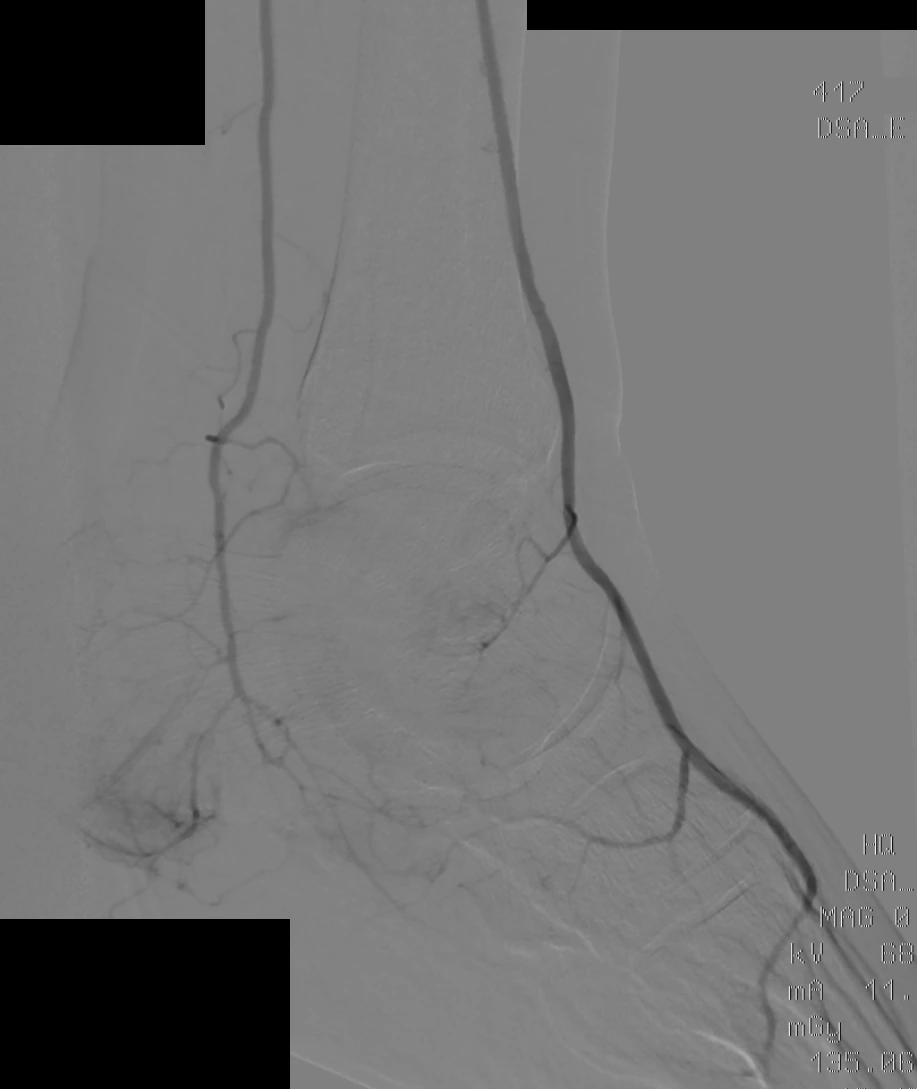
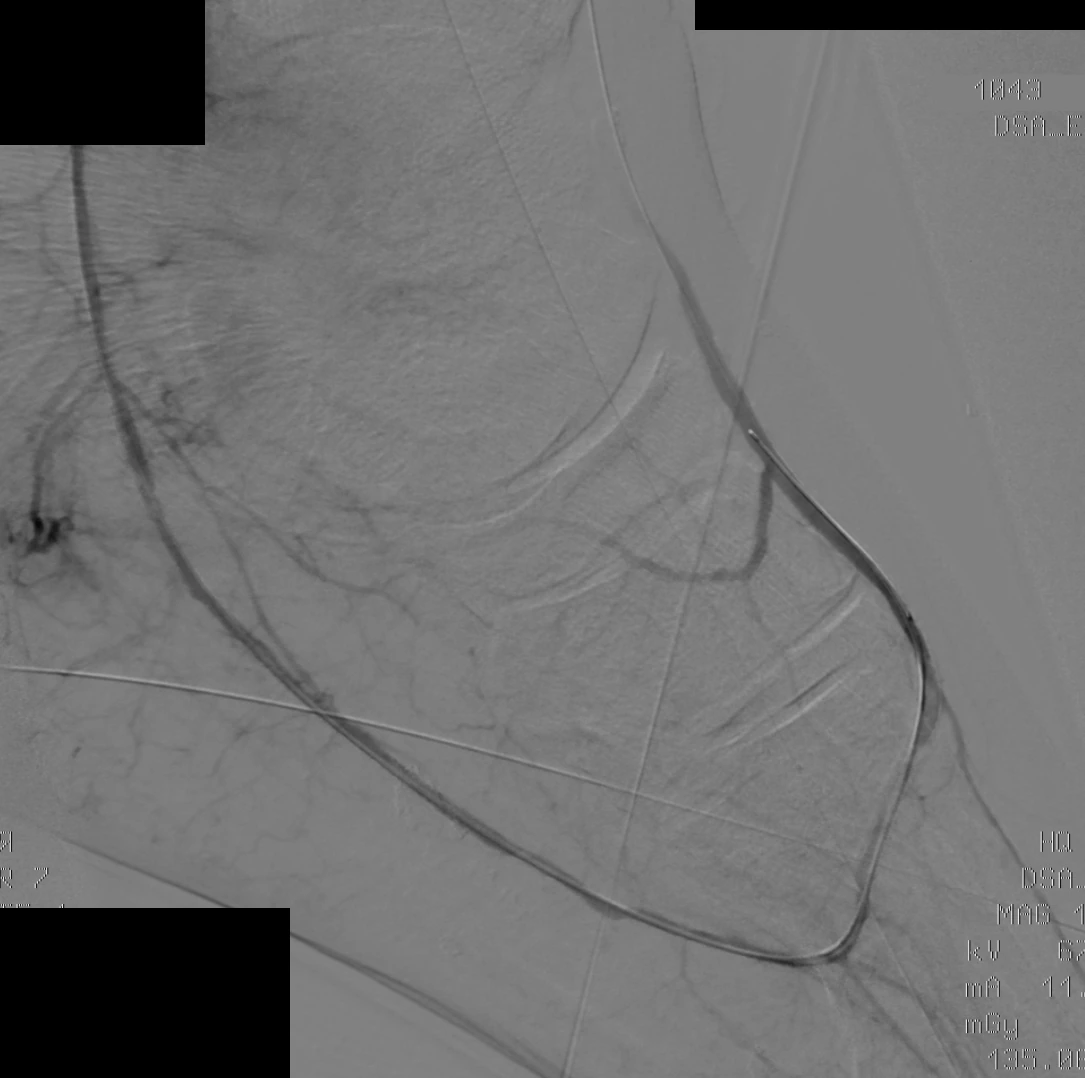
Venous arterialization is a newer way to bring blood to the foot through its veins. These advances, from treating the arteries of the foot to bringing blood through the veins, improve results and the number of limbs saved.
Vascular specialists dedicated to limb preservation, with the skill and the commitment to give these patients the intensive care they need, reduce amputations.14 That care preserves limbs and prolongs life, and the rewards of saving a limb and a patient’s quality of life are immense.
The amputation lottery
Care of limb-threatening ischemia in the United States has been described as a “pathway to amputation”.15 It still is. Of 7,885 Medicare patients who had a major amputation for CLTI in 2017, 69% had no attempt to restore blood flow in the year before, and 63% had neither an attempt nor even an angiogram. Those who did have an angiogram or treatment before the amputation lived longer afterwards.16
Study after study has shown that the chance of a major amputation depends on who you are and where you live. This has been called the “amputation lottery”.17,18 Besides the patient’s lost quality of life, a primary amputation costs almost $10,000 more than endovascular treatment.17
References
- Varma P, Stineman MG, Dillingham TR. Epidemiology of limb loss. Phys Med Rehabil Clin N Am. 2014;25(1):1–8. https://doi.org/10.1016/j.pmr.2013.09.001
- Goodney PP, Tarulli M, Faerber AE, Schanzer A, Zwolak RM. Fifteen-year trends in lower limb amputation, revascularization, and preventive measures among Medicare patients. JAMA Surg. 2015;150(1):84–86. https://doi.org/10.1001/jamasurg.2014.1007
- Dillingham TR, Pezzin LE, Mackenzie EJ. Racial differences in the incidence of limb loss secondary to peripheral vascular disease: a population-based study. Arch Phys Med Rehabil. 2002;83(9):1252–1257. https://doi.org/10.1053/apmr.2002.34805
- Barnes JA, Eid MA, Creager MA, Goodney PP. Epidemiology and risk of amputation in patients with diabetes mellitus and peripheral artery disease. Arterioscler Thromb Vasc Biol. 2020;40(8):1808–1817. https://doi.org/10.1161/ATVBAHA.120.314595
- Duff S, Mafilios MS, Bhounsule P, Hasegawa JT. The burden of critical limb ischemia: a review of recent literature. Vasc Health Risk Manag. 2019;15:187–208. https://doi.org/10.2147/VHRM.S209241
- Lee MS, Rha SW, Han SK, et al. Clinical outcomes of patients with critical limb ischemia who undergo routine coronary angiography and subsequent percutaneous coronary intervention. J Invasive Cardiol. 2015;27(4):213–217. https://pubmed.ncbi.nlm.nih.gov/25840405/
- Varghese JJ, Estes BA, Martinsen BJ, et al. Utilization rates of diagnostic and therapeutic vascular procedures among patients undergoing lower extremity amputations in a rural community hospital: a clinicopathological correlation. Vasc Endovascular Surg. 2021;55(4):325–331. https://doi.org/10.1177/1538574420975588
- Mustapha JA, Katzen BT, Neville RF, et al. Determinants of long-term outcomes and costs in the management of critical limb ischemia: a population-based cohort study. J Am Heart Assoc. 2018;7(16):e009724. https://doi.org/10.1161/JAHA.118.009724
- Armstrong EJ, Alam S, Henao S, et al. Multidisciplinary care for critical limb ischemia: current gaps and opportunities for improvement. J Endovasc Ther. 2019;26(2):199–212. https://doi.org/10.1177/1526602819826593
- Khan NA, Rahim SA, Anand SS, Simel DL, Panju A. Does the clinical examination predict lower extremity peripheral arterial disease? JAMA. 2006;295(5):536–546. https://doi.org/10.1001/jama.295.5.536
- AbuRahma AF, Adams E, AbuRahma J, et al. Critical analysis and limitations of resting ankle-brachial index in the diagnosis of symptomatic peripheral arterial disease patients and the role of diabetes mellitus and chronic kidney disease. J Vasc Surg. 2020;71(3):937–945. https://doi.org/10.1016/j.jvs.2019.05.050
- Farber A, Menard MT, Conte MS, et al. Surgery or endovascular therapy for chronic limb-threatening ischemia. N Engl J Med. 2022;387(25):2305–2316. https://doi.org/10.1056/NEJMoa2207899
- Bradbury AW, Moakes CA, Popplewell M, et al. A vein bypass first versus a best endovascular treatment first revascularisation strategy for patients with chronic limb threatening ischaemia who required an infra-popliteal, with or without an additional more proximal infra-inguinal revascularisation procedure to restore limb perfusion (BASIL-2): an open-label, randomised, multicentre, phase 3 trial. Lancet. 2023;401(10390):1798–1809. https://doi.org/10.1016/S0140-6736(23)00462-2
- Nickinson ATO, Dimitrova J, Houghton JSM, et al. Does the introduction of a vascular limb salvage service improve one year amputation outcomes for patients with chronic limb-threatening ischaemia? Eur J Vasc Endovasc Surg. 2021;61(4):612–619. https://doi.org/10.1016/j.ejvs.2020.12.007
- Allie DE, Hebert CJ, Lirtzman MD, et al. Critical limb ischemia: a global epidemic. A critical analysis of current treatment unmasks the clinical and economic costs of CLI. EuroIntervention. 2005;1(1):75–84. https://pubmed.ncbi.nlm.nih.gov/19758881/
- Secemsky EA, Kirksey L, Quiroga E, et al. Impact of intensity of vascular care preceding major amputation among patients with chronic limb-threatening ischemia. Circ Cardiovasc Interv. 2024;17(1):e012798. https://doi.org/10.1161/CIRCINTERVENTIONS.122.012798
- Yost ML. Cost-benefit analysis of critical limb ischemia in the era of the Affordable Care Act. Endovasc Today. 2014;13(5):29–36. https://evtoday.com/articles/2014-may/cost-benefit-analysis-of-critical-limb-ischemia-in-the-era-of-the-affordable-care-act
- The diabetic amputation lottery. Drug Ther Bull. 2011;49(9):97. https://doi.org/10.1136/dtb.2011.02.0051